
Plants for life
Scandinavian-American gardeners help elementary schools teach the lessons of plants.
-
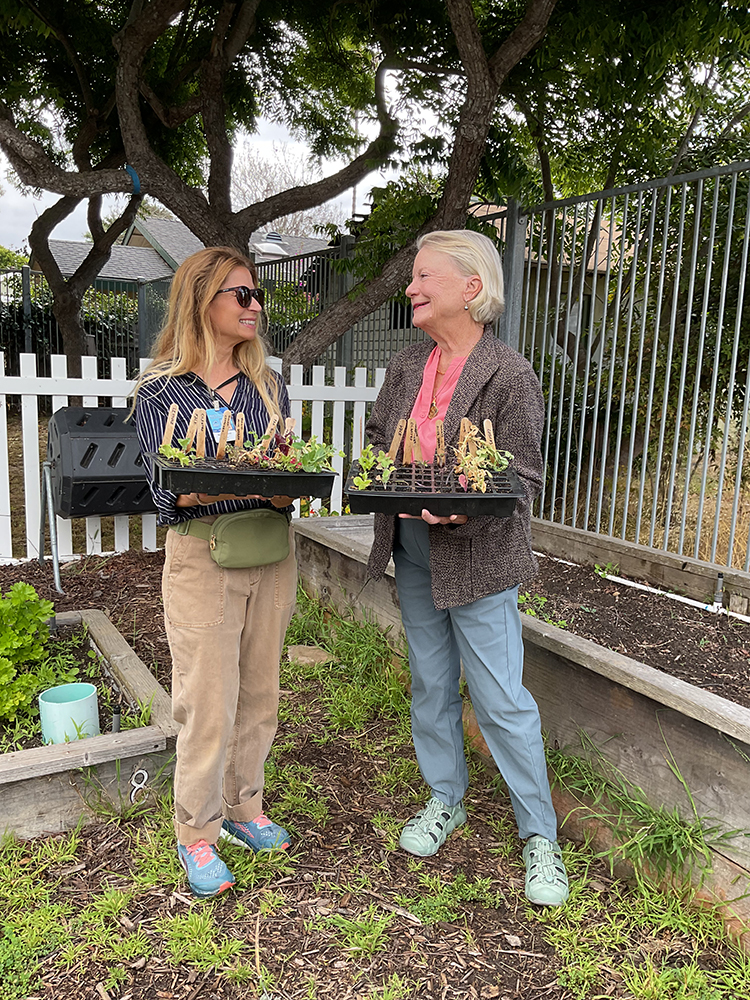 Teacher Sue Larson on left, Helen Nielsen on right.
 -
-
“We needed to do something,” says Helen Nielsen, a Plants for Life activists at one of four community gardens in Carlsbad, California. “We see the knowledge level of our elementary aged children dropping in every category.”
Reading and basic English skills have been falling in the USA for the last 10 years, and while some wish to shrug that off as a result of the online-video teaching which took place nationwide during the 2020-2022 Covid pandemic, we now realize it began much earlier with children’s addiction to the distractions on social media, she notes.
That attraction spread to children spending many hours each day on a variety of apps on social media and gaming of various sorts became much more dominant: 5-8 year olds averaged 3.5 hours each day; 8-12 year olds 5.5 hours; 13-18 year olds 8.5 each day.
Lost in that pattern was recognition of the value of growing and eating "real" food. The result has been the explosion in the consumption of dramatically poor quality foods driving up chronic illnesses such as childhood obesity, fatty liver disease, bleeding bowel syndrome, and a host of others rarely seen in American children 70 years ago. As we became a Fast Food Nation, we forgot the value of healthy eating and recognizing food as medicine.
Bypassing the current fashionable emphasis on avoiding ultra-processed foodstuffs, and the perennial debates between vegans, vegetarians, meat-eating paleo dieters, carbohydrate enthusiasts and others, “There is no question that you can get everything your body needs, including protein, from plants, and most children have no awareness of that,” says Nielsen.
Thus, together with other community gardeners, she sprouted a selection of healthy plants with nutritional and medical value to present to the neighborhood elementary school located two blocks away.
That school had an overgrown garden, but the potential for increasing the level of plant learning was clear. Nielsen is a devotee of the “Edible School Yard” unitive started by Alice Waters in Northern California in 1995. That program involves not only growing and learning how to prepare nutritious meals, but it also integrates agricultural and gardening practices into ALL school curricula such as how the history of agriculture shaped various civilizations and how mathematics is involved in calculating yields, etc. -
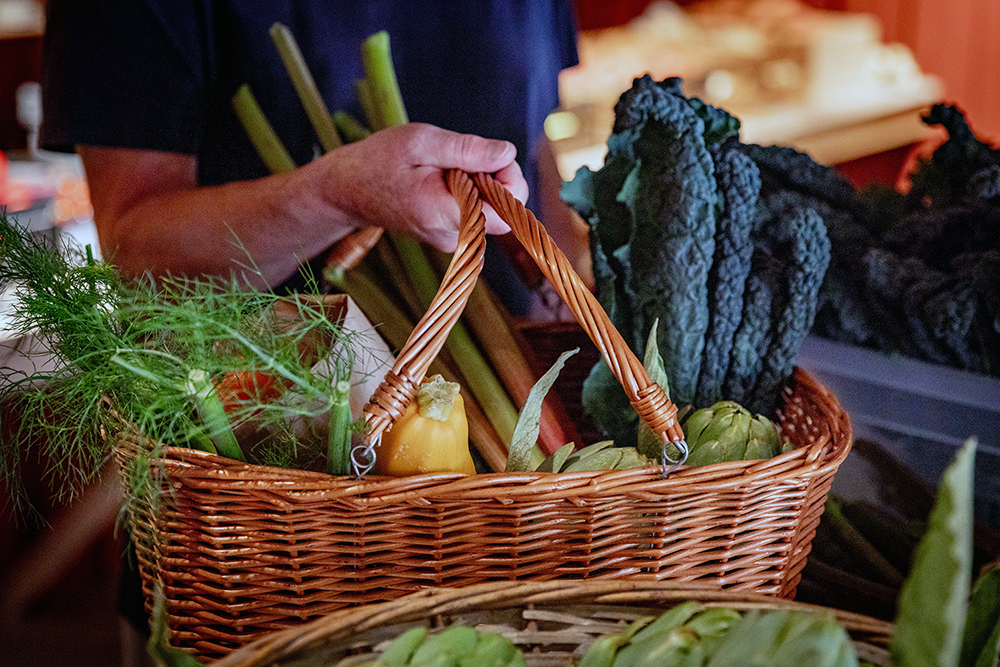 “There is no question that you can get everything your body needs, including protein, from plants, and most children have no awareness of that,” says Helen Nielsen.
 -
-
Healthy medicinal plants and herbs
In late May the community gardeners presented the school with 90 newly sprouted plants.
“We also tried to weave other lessons into the effort,” says Dr. Yvonne Scarlett, an autoimmune disease specialist and acupuncturist. As a gardener-participant, she placed only one seed in each of the sprouting cups of the four trays used in this project. “That was to show that one seed can yield a plant producing an abundance of vegetables, and saving seeds at summer’s end means you can start this process all over again next year,” she notes.
The plants — together with educational material highlighting the vitamin, nutrition and mineral value in each vegetable’s color, and the uses of food and herbs as medicine by the Indigenous populations who occupied that area long before European settlers arrived — were welcomed by teacher Sue Larson, who also oversees the garden programs.
The newly sprouted plants included lettuce, kale, cilantro, Cherokee tomatoes, Alice Cream tomatoes, pea pod vines, and sugar snap pea vines. Among them was also echinacea, which the Native Americans used to treat wounds, colds and fevers, and butternut squash, which beyond its nutritional benefits and delicious taste, support eye health, immunity, heart health and digestion.
"It is our hope that efforts like this will spread to community gardens throughout the county and state, and across the country. That will be up to those gardeners," says Nielsen. -
Next up for these children’s health-activist gardeners: dehydrating the apples, oranges, apricots and pomegranates, and with other forms of “nature's candy” like carrots and uncracked nuts, they will offer these treats to the costumed kids who will come to their door on Halloween.
Per-Olof Nielsen -
-