
The indomitable Småland spirit
“Sweden for real” is the official slogan of the region of Småland in the southeast of Sweden. This is the birthplace of a number of famous Swedes, from IKEA founder Ingvar Kamprad to authors Astrid Lindgren and Viktor Ryberg as well as top tennis players Mats Wilander and Stefan Edberg.
-
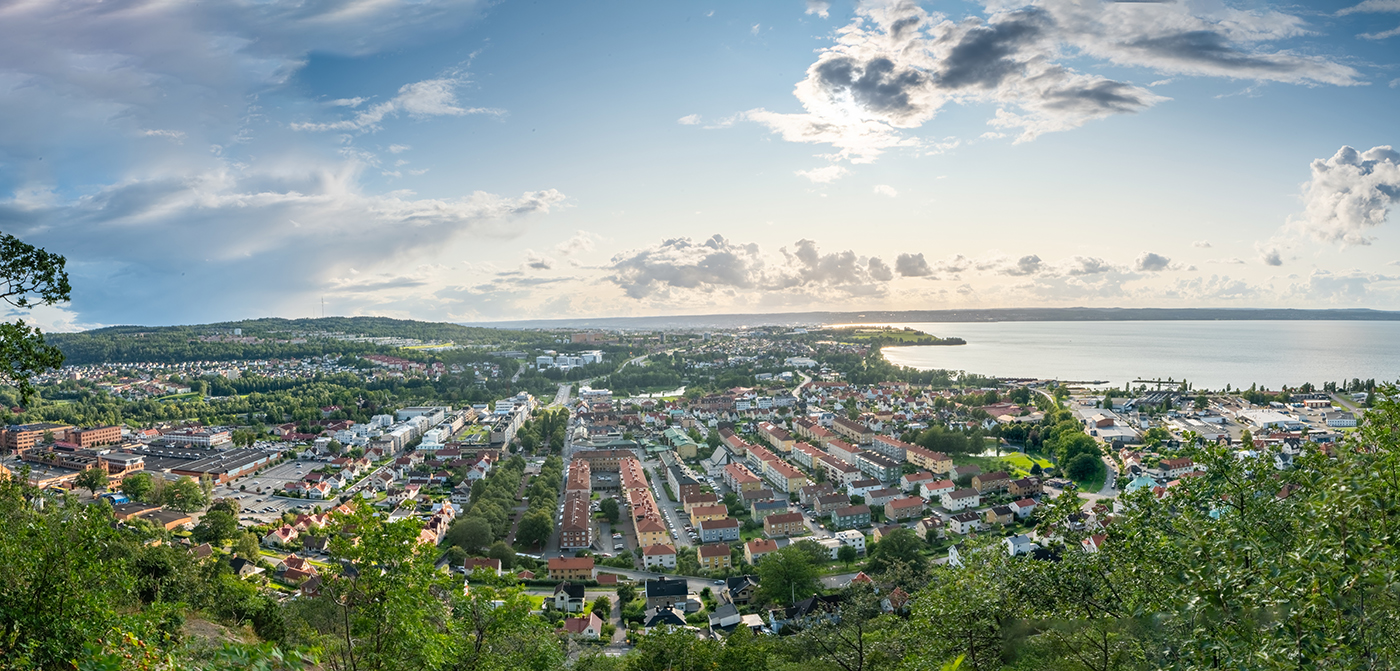 View of Lake Vättern and Huskvarna, the eastern part of Jönköping, the main city in the Swedish province of Småland. Jönköping was the first city in Sweden to be granted city rights in 1284 by King Magnus Ladulås, who ruled mostly from Vättern's largest island Visingsö.
 -
-
Despite Småland being one of Sweden’s historically poorest regions, it has still enabled the creation of some highly successful industrial companies, from IKEA to Husqvarna – the latter perhaps mostly known for sewing machines, outdoor equipment and Electrolux home appliances, and NIBE Group which develops eco-friendly solutions for indoor climate, heating and water heating.
The achievements are quite remarkable, as Småland is often considered to have one of the most barren landscapes in the country, with large parts having sand and boulders, making it less suitable for large scale agriculture. As a result of the region’s historically challenging living conditions, its inhabitants were forced to be innovative and self-reliant, sparking a demand for alternative means of livelihood.
Iron came to play an important role early on, and by the mid-1400s, the town of Jönköping was one of the main centers for Swedish iron handling. -
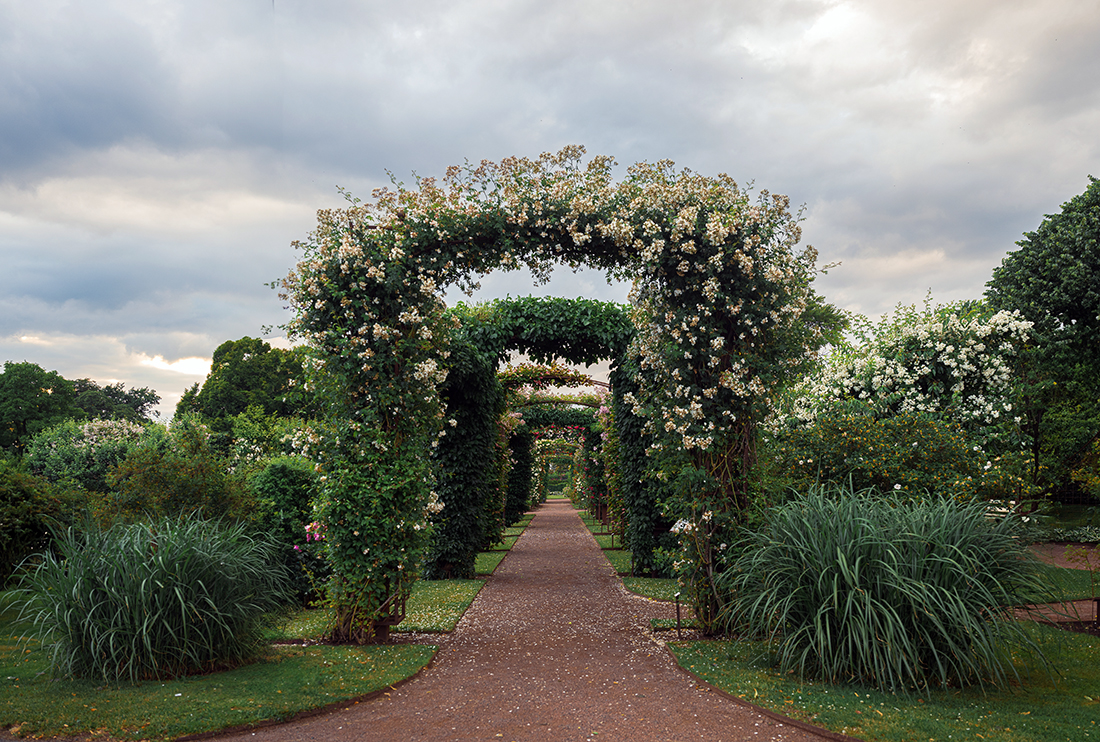 Wedding arch in Rosenlund Rosarium with white roses and green plants
 -
-
Small but mighty
Understanding the “indomitable Småland spirit” requires an understanding of its historical roots. The name Småland means “small lands,” referring to the numerous small provinces that made up the region. These provinces were largely independent during the Viking Age and early Middle Ages, each with its own laws and governance. The region became Christianized in the 1200s and was later integrated into the Kingdom of Sweden. Until then, the regions bordering Skåne were highly disputed. In fact, the old border region between Småland and Skåne is one of the most war-torn areas in the world from a historical perspective, and every single generation of people born between 1150 to 1679 in these regions were affected by a war in some form.
For several centuries, military conflict was almost the norm and every time the rulers in Stockholm and Copenhagen started a new one, the border population risked being hit hard. Living on the border was both a blessing and a curse. A curse in the sense that a new war was always likely, but also a blessing as one could live according to old customs for a long time without being reached by the long arm of state power.
The border population therefore developed various strategies to reduce the harmful effects of the constant conflicts. One strategy involved the local border populations on both sides establishing their own peace agreements independent from overlords. The so-called border peace was not something the rulers looked upon with a gentle eye. The exposed border situation also meant a particular border mentality developed, characterized by a tendency to resort to violence. This meant the border region could become a dangerous place.
It was not until the former regions of Småland had fallen into Swedish hands - with the Treaty of Roskilde in 1658 - that things starting calming down in Småland from the perspective of constant conflict. Around the same time, Sweden underwent significant transformations marked by extensive military engagements and territorial expansion, establishing itself as a major European power. This period, often referred to as the “Swedish Empire Era,” saw Sweden’s involvement in several key conflicts and wars. For the people of Småland, this period brought a surge in demand for weapons, spurring local industries to excel in forging swords and bayonets. -
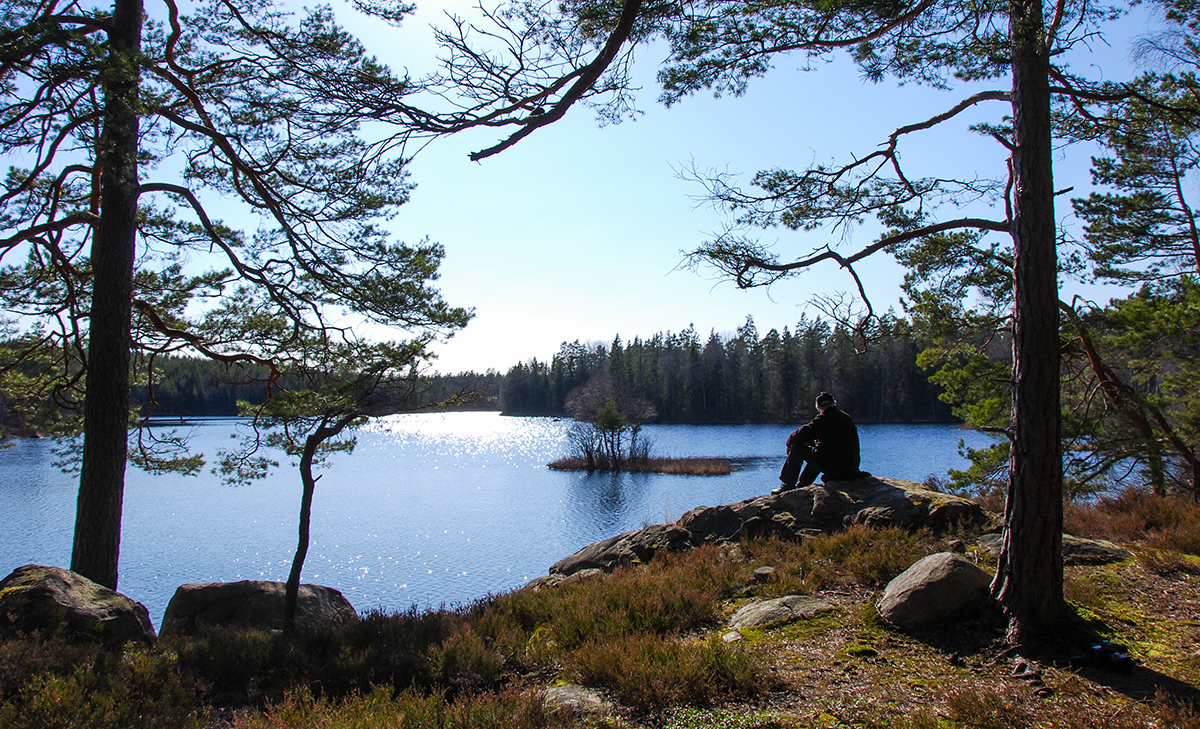 Småland has many beautiful and large lakes, with Vättern, Bolmen and Åsnen being some of the more famous.
 -
Building a national defense center
One of the cities that was already in an excellent position for that transformation was Jönköping, located on the shores of Lake Vättern. Five cities (Jönköping, Söderhamn, Norrköping, Örebro and Norrtälje) were responsible for weapon deliveries in 1620, when King Gustaf II Adolf commissioned the towns to produce weapons for the many wars. But long before the Jönköping’s Rifle Factory was founded, there had been gunsmiths in the Småland city. The five cities manufactured the various weapon parts to exact orders, which were then delivered to the Jönköping factory. An additional factory was established in Husqvarna in 1689, a location that was chosen for its waterpower from the waterfalls essential for drilling and grinding gun barrels. Water supply had become irregular at the original location in Jönköping and eventually all production was moved to Huskvarna. The company was privatized in 1757 and 10 years later officially named the Husqvarna Weapons Factory (Husqvarna Vapenfabriks Aktiebolag).
Charles XII, who reigned as Sweden's king from 1697 to 1718, was a central figure in the industrial growth due to his military campaigns. In 1718, however, he was killed during the siege of Fredriksten in Norway. His death had profound consequences for Sweden, as his aggressive military campaigns had severely drained the nation’s resources. More particularly for “Smålänningar” (the Smålandians), this meant much of their weapon production was no longer needed, and they started seeking alternative uses for the iron. This led to the founding of several small industries specializing in the production of everything from mousetraps, nails, and buckles, to safety pins and whisks. Wherever people met, collaboration and dealmaking flourished, giving rise to a culture where a handshake was as good as a contract. Signs of the small business culture’s network of service, goods, and capital exchange were evident. Ingenuity seemed boundless. And the people of Småland overcame obstacles like crop failure and famine, smoothly transitioning into the modern industry of the 1900s, reaching its pinnacle with such mega successful companies as IKEA during the second half of the century. -
Resourceful and resilient
The story of its founder Ingvar Kamprad is certainly one of resilience and tremendous reward. When the first IKEA store opened in 1958, Kamprad described himself as “the black sheep” of the furniture industry in his opening speech. He recounted how IKEA had been banned from other furniture shows and plagued by malicious rumors that their goods were substandard and their service weak. Few could probably have predicted then what a global phenomenon IKEA would become, with total sales of almost $50 billion in the 2024 financial year.
The frugality of Smålandians in general - and Ingvar Kamprad in particular - had lead to a reputation of being the “Scotsmen of Sweden.” This frugality, combined with their industrious nature, has allowed them to thrive despite historical challenges. A quote by the IKEA founder in the company bible written in 1976 - “The Testament of a Furniture Dealer” - explains it clearly: “While we are concentrating on important areas, we must learn to do what people in Småland call “lista,” which is a common term in Småland; it means doing what you have to do with an absolute minimum of resources.”
Some of this mentality was likely brought over to the United States from emigrating Smålandians. One of the emigrants was Gideon Sundbäck who was born in Jönköping in 1880 and emigrated to the United States in 1905 after studies in Germany. In 2006, Sundbäck was honored by posthumously being included in the National Inventors Hall Of Hame for his work on developing the zipper—an accomplishment highlighted on Google’s main page in 2012.
Early struggles to great successes
Author Viktor Rydberg was born of humble parentage in Jönköping in 1828. In 1834, his mother died during a cholera outbreak. Her death broke the spirit of his father, who yielded to hypochondria and alcoholism, contributing to his loss of employment and the family home, forcing authorities to board young Viktor in a series of foster homes, one of which burned down, further traumatizing the youth. Despite his difficult childhood and early financial problems, he had a great thirst for learning, which landed him a job at a newspaper in Gothenburg in 1855. He remained employed there for 20 years, and it was during this time that his first novels were printed. He soon became a central figure of late Romanticism in Sweden, and Sweden's most famous living author. Some of his most famous work include the poem “Tomten” and the lyrics for “Gläns över sjö och strand,” for which Alice Tegnér composed the music. The song is often played at Lucia and Christmas concerts in Sweden.
The personal story of Astrid Lindgren is another perfect example of the indomitable Småland spirit, and it is beautifully told in the movie “Becoming Astrid” (“Unga Astrid"), released in 2018. It starts with an older Astrid opening letters sent by children all over the world in the 1980s. In one letter, a child asks how she can write so well about what it's like to be a child when it's been so long since she was one herself. Astrid looks back on her youth in Småland, when her younger self got a job as an assistant at the newspaper Vimmerby Tidning in the 1920s. She falls in love with her much older boss, Reinhold Blomberg, and soon discovers that she is pregnant at the age of 18. Reinhold is divorced and therefore cannot sign the paternity certificate as there is a risk that he will end up in prison. Astrid goes to Copenhagen where she does not have to identify the father to authorities and secretly gives birth to a son, Lars. The child spends his first year with a Danish foster family, and Astrid realizes she no longer wants to be part of Reinhold’s life as he consistently broke promises to help bring Lars to her. This period of personal turmoil, during which she defied societal expectations as an unmarried mother, contributed to the later themes of resilience and independence in her writing. In 2017, she was calculated to be the world’s 18th most translated author across all genres.
World class racquet sport players
Småland is also the birthplace of former tennis world champions Mats Wilander and Stefan Edberg, who solidified the “Swedish Tennis Wonder” following Björn Borg in the 1970s. Wilander stunned the tennis world in 1982 when he won the French Open at the age of 17 and would go on to win three more Grand Slam titles by the age of 20. At the time, he was the youngest man to have achieved that feat. The culmination of his career came in 1988, when he won all the Grand Slams except for Wimbledon, which was won by another Swede, Stefan Edberg. This was the most recent season when male players from the same country won all four Grand Slam titles, an accomplishment that not even one of “The Big Three” (Federer, Nadal and Djokovic) have been able to help repeat for their respective countries since then. Considering that even today Småland is home to less than a million people, this is indeed quite remarkable. Possibly even more remarkable is that a single tennis club, Växjö Tennisklubb (VTS), has produced several players (Mats Wilander, Magnus Larsson and Jonas Björkman) who were all ranked within the top 10 at the peak of their respective careers. The club also produced Sweden’s Davis Cup Captain Carl-Axel Hageskog, who is widely regarded as one of the world’s greatest tennis coaches of all time. He led the Swedish Davis Cup team to 11 finals, including six victories, between the years 1985-2000.
The pride of Westerviks TK in Västervik is Stefan Edberg, who is one of only two players (along with John McEnroe) who’s been ranked both No. 1 in Singles and Doubles in the so-called “Open Era,” which started in 1968 when both professional and amateur players were allowed to compete in all tournaments for prize money.
More recently, Hovmantorp-born table tennis player Truls Möregårdh won silver in the 2024 Olympics and became the first European to win a World Table Tennis (WTT) Grand Smash singles title, when he won the inaugural 2025 Europe Smash in Malmö, Sweden. He defeated world No. 1 Lin Shidong in the final with a thrilling 4-3 victory, continuing a proud tradition of world class racquet sport players from Småland.
Innovative and world class furniture
Småland is also known for its furniture design. One of the pioneers in this area was Bruno Mathsson, who was an advocate of simplicity, beauty and elegance in form. Mathsson's furniture was innovative in structure and production techniques as well as design. Function and comfort were his primary objectives, and the mechanics of seating occupied his mind. His furniture is undoubtedly influenced by the bentwood designs of Alvar Aalto, but Mathsson’s commitment to bentwood and his range and virtuosity of the material exceeded that of all his contemporaries.
His designs from the 1930s and 40s were a major influence on modern Swedish furniture. An important inspiration for Mathsson was the park Apladalen in Värnamo, and the Bruno Mathsson Center is adjacent to the park. Apladalen is a so-called “Hembygdspark,” which can roughly be translated to “home village park” or “local heritage park.” These parks are common in Sweden and are typically a public space featuring historic buildings and an emphasis on local culture and traditions. The phrase “local heritage park” emphasizes its function as a preservation of local history and culture, as seen in descriptions of parks with historic buildings and traditional events. Skansen in Stockholm is both Sweden’s largest and oldest hembygdspark, and Apladalen features some of the some elements as Skansen, although in a much smaller scale.
Bruno Mathsson was born in Värnamo in 1907, where he lived and worked most of his life as a furniture designer and manufacturer. He followed in the footsteps of his father, Karl Mathsson, a highly skilled fourth-generation master carpenter. Bruno never received any formal education but instead acquired knowledge by learning the profession in his father’s factory, where he gained a thorough knowledge of techniques for high-mass wood and a well developed feeling for the properties of wood. He carefully studied the human form by sitting in a snowdrift and studying the imprint that his body made to get a perfect curve for his chairs. He also began to experiment with flexural bonding, which enabled him to create extremely strong parts. After some initial setbacks, he achieved his international breakthrough at the 1937 Paris International Exposition, where his furniture received significant acclaim. He was awarded a Grand Prix for his innovative bed design, "Paris." This success led to international exposure, with a commission from the Museum of Modern Art (MoMA) in New York and increased exports. In 2024, American designer and Columbia University professor Stephen Burks became the first recipient of the Bruno Mathsson Design Residency, which offered him the opportunity to explore the extensive furniture and manufacturing industry in the Jönköping region as well as studying Bruno Mathsson's work more in detail. Burks followed by Danish designer Maria Bruun in 2025.
Musical artists and unexpected connections
Music from Småland and neighboring landskap Halland was mentioned in Nordstjernan issue 16 of 2021, and covered domestic artists like Alice Babs to the international stars Agneta Fältskog and Nina Persson of ABBA and The Cardigans, respectively. Also originating from Småland is Ola Salo of rock band “The Ark,” which is planning another reunion tour in the summer of 2026, starting in Motala on June 24 and finishing in Solna on August 23. The band got their big breakthrough in 2000 with the release of the single “It Takes A Fool To Remain Sane,” which was a big hit in Sweden and Italy. Salo has subsequently played both Jesus and Judas in Andrew Lloyd Webber’s “Jesus Christ Superstar” and he also translated the book of the musical into Swedish.
Another famous artist hailing from Småland is Charlotte Perelli, who won the Eurovision Song Contest 1999 with “Take Me To Your Heaven" ("Tusen Och En Natt"). She has also played Belle and Eva Peron in the musical productions of “Beauty And The Beast” and “Evita.” Perelli was born in Hovmantorp, which is also the hometown of the table tennis player Truls Möregårdh. The small town of about 3,000 people links them both also to American actress Michelle Pfeiffer, whose great grandmother originated from Hovmantorp and Hornaryd.
From innovation and sports to literature and music, the indomitable Småland spirit has paved the way for some of the most remarkable feats in Sweden and abroad, showing that even with small resources one can accomplish spectacular results. -
Jimmy Granström
-
Jönköping was the first city in Sweden to be granted city rights in 1284 by King Magnus Ladulås, who ruled mostly from Vättern's largest island Visingsö.
-
-