
Kiruna, a wintry visit
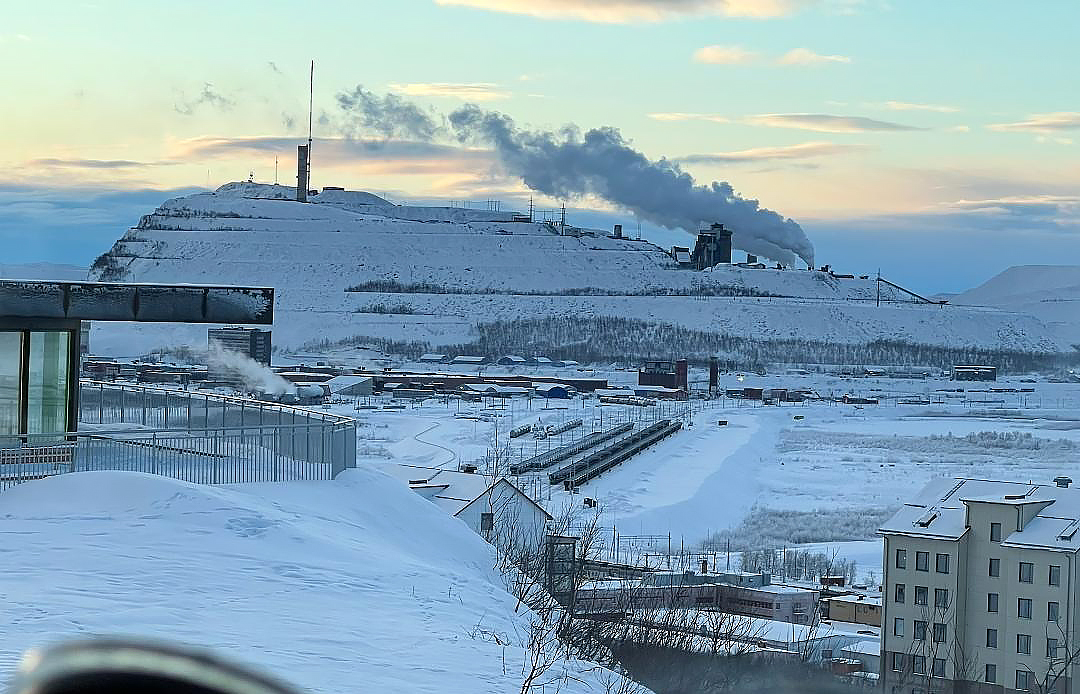
The city of Kiruna in Norrbotten - even after its years-long move two miles to the east began in 2017 - is located 90 miles north of the Arctic Circle. That’s very far north, but it's still another 54 miles as the crows fly to the northernmost point of Sweden.
-
-
-
Last January, my wife Jan and I traveled to Stockholm to meet with our two sons, Patrik and Niklas. At the time, however, Niklas, the opera singer, was in Finland as a guest soloist in a new opera “The Morning Star.” He had gotten us great tickets, so we went to Helsinki for three days and saw him at the opening performance of the Finnish National Opera.
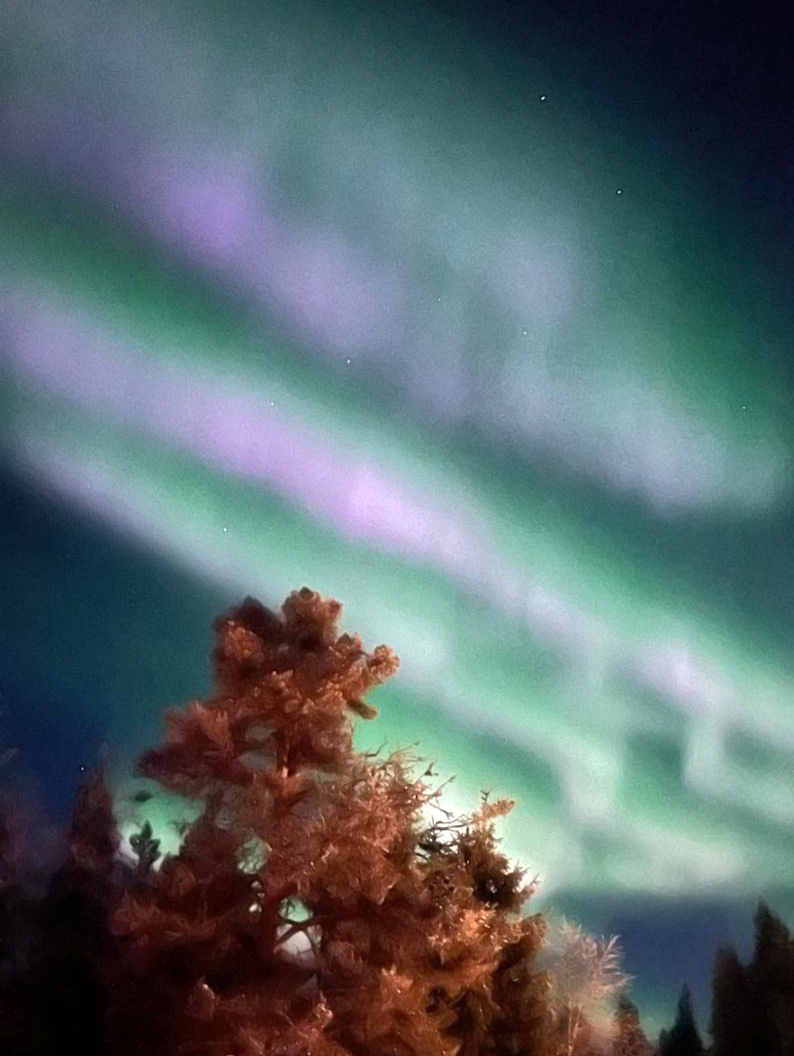
When planning this trip we thought: While in Sweden (i.e. Stockholm), why not also visit a place we have not been before? That would be in the north ... far north - 600 miles north of Stockholm. KIRUNA! Here we would see the Ice Hotel, the famous Kiruna Church, and maybe a glimpse of the Aurora Borealis.
The city of Kiruna - even after its years-long move two miles to the east began in 2017 - is located 90 miles north of the Arctic Circle. That’s very far north, but it's still another 54 miles as the crows fly to the northernmost point of Sweden.
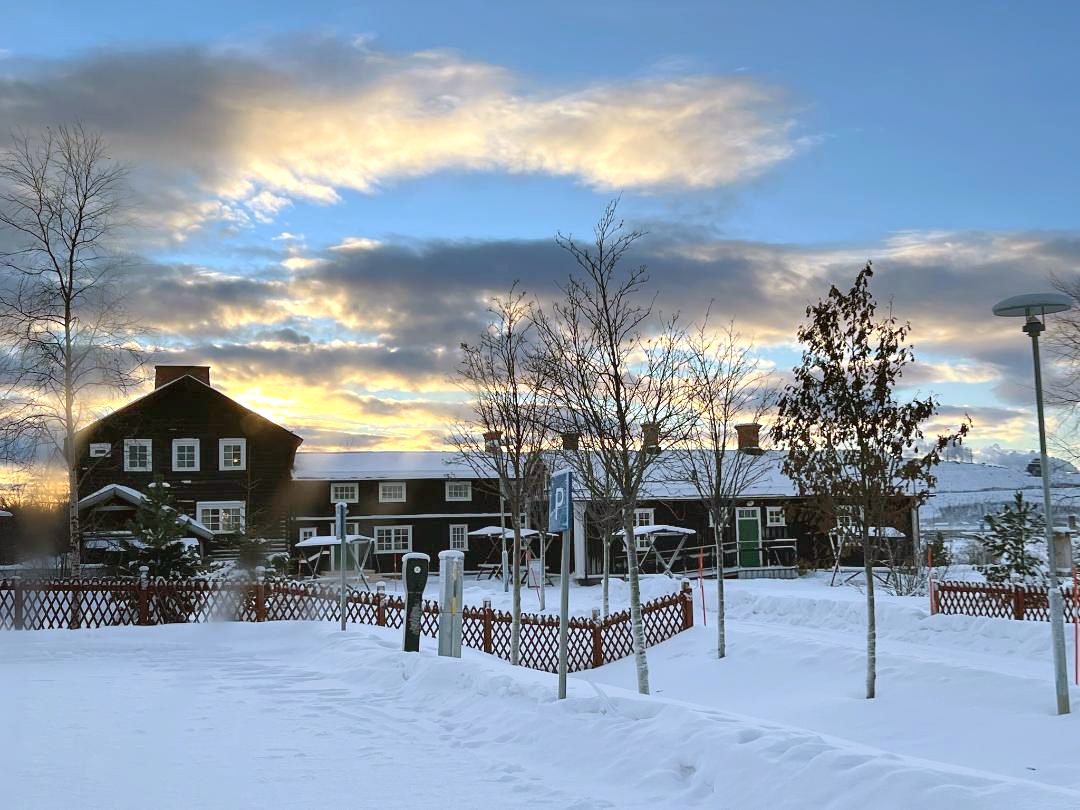
When we arrived, Kiruna was at its best. It didn't snow, we had clear skies almost all the time we were there, and it wasn't too cold - except in Jukkasjärvi where the Ice Hotel is located. There we experienced minus 29 degrees Fahrenheit!
Founded in the year 1900, Kiruna now has 23,000 inhabitants, but it is the second largest municipality (by area) in the world, even if most of its land is uninhabited. In the west and north it borders on Norway and on the east on Finland. Within its limits is Kebnekaise, Sweden’s largest mountain. There is the world’s largest iron ore mine and there is Esrange, the European Space and Rocket Range as well as the Estrack, the Kiruna station of the European Space Agency. And, of course, the Ice Hotel. Kiruna was granted a town charter in 1948.
Since 1999, Kiruna has hosted a unique annual Snow Festival — it was actually going on when we were there. It is a combination of art and play with an ice-sculpture competition that draws artists from all over the world. The square at the new center, right outside our hotel, was filled with all kinds of fabulous and imaginative sculptures. -
-
-
The mine
Findings have shown that people lived in this region 6,000 years ago. The presence of iron was talked about in the end of the 17th century. Not until the end of the 19th century did mining start. The company LKAB (Luossavaara-Kiirunavaara Aktiebolag) was founded in 1890, named after the two mountains from which the iron ore was taken.
The railway to Kiruna from Luleå opened in October 1899 and three years later the section between Kiruna and the ice-free coast at the Norwegian city of Narvik, was finished.
The stretch of iron ore at the Kiirunavaara mountain is 2.5 miles long. It is 90 feet thick and reaches a depth of almost 1.5 miles. It has so far produced 950 megatons of ore, but that is only one-third of the original body. LKAB is producing 80% of the European Union’s supply.
LKAB’s operations at this mine employs 1,800 people, of which 400 work in the mine. Its deepest level is 4,500 feet below surface. On different levels in the mine are systems of
roads and railroads for the transportation of the ore, which is then hoisted up to a level of 750 feet from the surface, where it is loaded onto the trains to Narvik and Luleå.
The neighboring mountain of Luossavaara is no longer used for mining. Instead, it is a popular ski slope with a lift.
The mine operations grew and so did the community of Kiruna. The man associated with Kiruna’s development – also called the “Founder of the Community,” was Hjalmar Lundbohm. He was born in the province of Dalsland in 1855, graduated from Chalmers in Gothenburg and became a geologist. He came to Kiruna and LKAB in 1898. Two years later he was appointed the top manager of LKAB’s mining operations. In addition, he also became active in the relationships between LKAB and the local population, the Sami.
LKAB’s mines not only contain iron ore. Not long ago it was announced that they were also sitting on the largest known deposit of rare earth metals in Europe. -
-
Moving the town
It has been known for a long time that the Kiirunavaara mine compromises Kiruna's town center. The mine is expanding beneath Kiruna, so in 2004 it was decided that the city would have to be moved in order to continue mining. Cracks had been discovered in a school and in the hospital, the mine was about to swallow the town.
By 2010 the Kiruna city council and LKAB made the decision to move the town two miles eastward, including physically dismantling and moving more than 20 significant buildings — including the historic Kiruna Church — and about 6,000 residents.
The move started in 2017 and most of the center was re-established by 2022, but the work is not expected to be fully completed until in 2035.
The designing of the new city was subject for an architect’s competition which was won by
White Architects, Gothenburg in cooperation with and Ghilardi-Hellsten Architects, Oslo. The location of the new city has received some criticism — residents have started to complain that the city is colder. Jennie Sjöholm at the University of Gothenburg found in a study that the new town can be as much as 10 degrees (Celsius) colder in the winter, compared with the previous location. She says: “Decision makers did not optimize the design for the urban climate when they planned the city.” The original plans were made in 1900 by the National Planning Director and architect Per-Olof Hallman, Stockholm (1869-1941). He selected the location in terms of climate, on a south-facing slope. Streets were following the terrain to avoid wind-tunneling and maintain beautiful views for the residents. Instead of a large square or park, Hallman chose to create smaller green spaces at the streets’ intersections.
“The streets in the new town are laid out in a grid pattern. The low sun has difficulty to reach the ground for many months, because the streets are too narrow and buildings too tall. The area is in a depression where, in the winter, cold air collects,” Sjöholm said. -
-
Architecture, architects
Lundbomsgården was one of the first buildings to be moved to a new, safe location in 2017. It was designed by architect Gustaf Wickman (1858-1916) and built in 1895 as a residence for Hjalmar Lundbohm, who died in 1920, and whose nephew was the well known painter Sixten Lundbohm. Today the building is a restaurant and conference center.
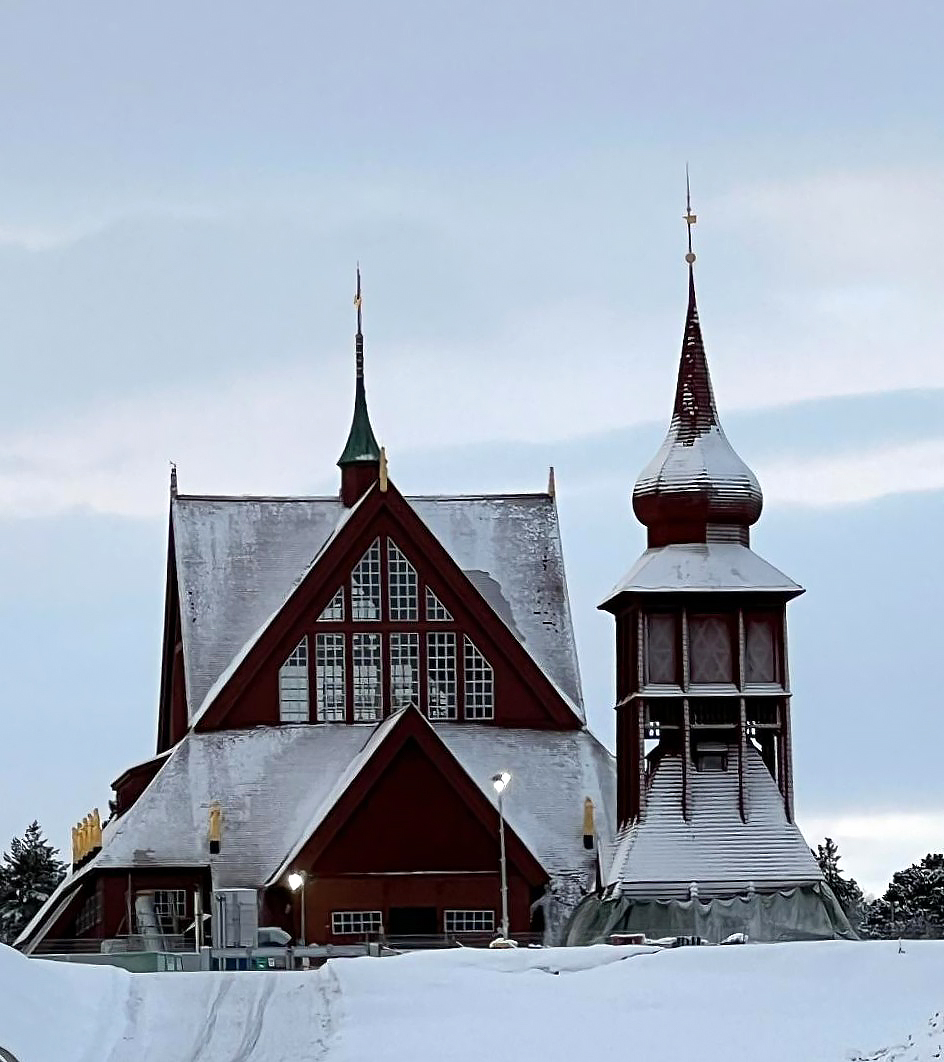
Kiruna Church, called “iconic,” was once voted as Sweden’s most beautiful building. It was Hjalmar Lundbohm who commissioned Gustaf Wickman to design the church, built between 1909 and 1912 in the Gothic Revival style. Its famous altar piece was designed by Prince Eugen (1865-1947), who was an acknowledged artist.
It took the engineers about 1,000 hours for planning the move of the church. Some roads were temporarily widened. The church weighs almost 700 tons and was jacked up four feet from the ground and placed onto steel beams supported by two trains of 28 axle lines. The move took two full days, on August 19 and 20, 2025 — an event witnessed by thousands in person as well as millions on TV. The church will be reopened for the public in the first half of 2027.
Wickman was also commissioned by Lundbohm to design buildings in the town. (Among many other designs, he is also known for the “Swedish Villa” at the 1893 World Exhibition in Chicago).
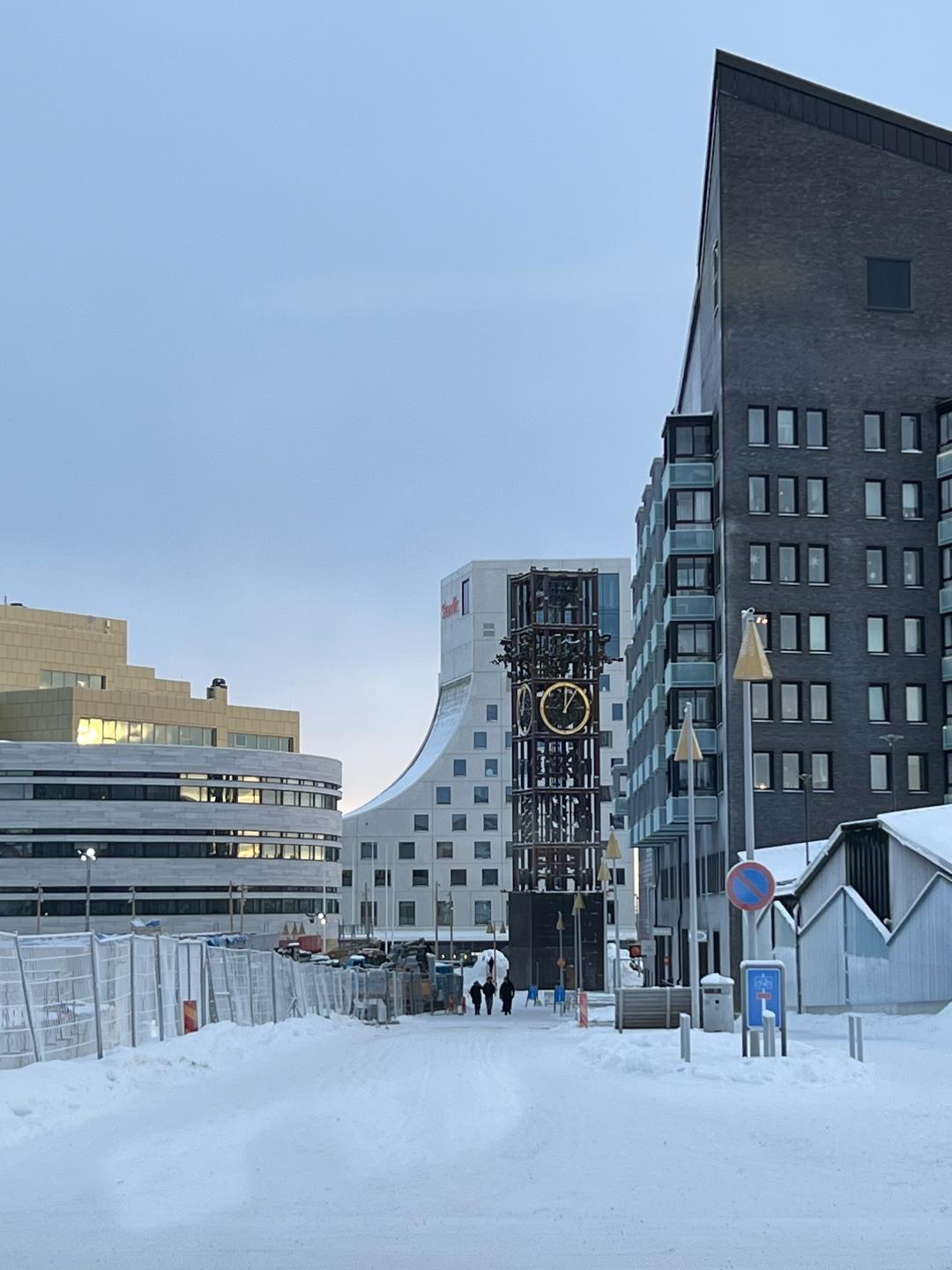
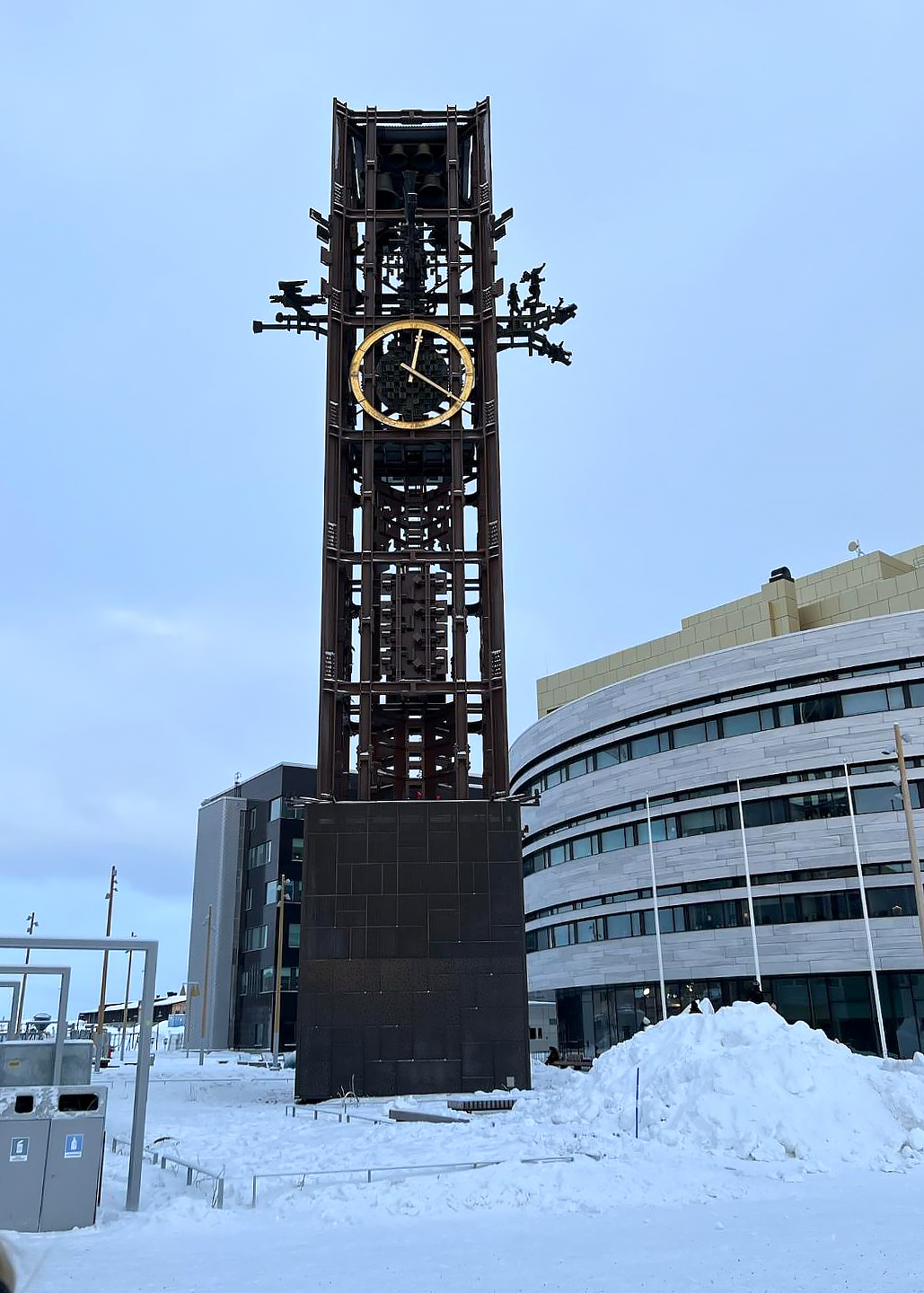
This year on March 10, Kiruna and LKAB agreed on preserving (and moving) the Old Fire Station and the Old Cottage Hospital. Negotiations on how to carry out the moving have started. The Old City Hall was designed by architect Artur von Schmalensee (1900-1972) and opened in 1963. A clocktower on the roof was constructed from cast iron and with sculptures by Bror Marklund. Unfortunately, this building was situated within the zone in which all buildings would have to be moved – or destroyed. It would not be practical to move this large building, so a new one was built in the new Kiruna center in 2018. The clocktower was saved and placed on the square outside the New City Hall, which was designed by Danish architect Henning Larsen as a result of an architect’s competition. It was built in 2018, now called “Kristallen.” The Old City Hall was demolished in 2019.
Scandic Hotel was built in 2022. At 13 stories tall, it is the highest building in Kiruna. The architecture firm Sandellsandberg arkitekter, Stockholm, designed it.
Ralph Erskine (1914-2005) was a renowned British architect who moved to Stockholm in 1939. He quickly became known as a great architect. Between 1955 and 1965 he was commissioned to design three projects in Kiruna: an apartment block named Loket; housing and services named Ortdrivaren; and apartment buildings in Svappavaara. Unfortunately, as a result of the relocation of Kiruna city, the demolition of all these apartment buildings at both Loket and Ortdrivaren was required. -
-
The Ice Hotel
East of Kiruna in the village of Jukkasjärvi is the Ice Hotel. The hotel has warm accommodations with 40 year-round hotel rooms and cabins, but every year the 45-50 ice suites and rooms melt down and get rebuilt with ice from the nearby Torne River. Established in 1990, it is the world’s first and largest ice hotel.
In March each year, ice is taken from the river and stored in a nearby production hall with room for ice and snow to be used in the fall when a new ice hotel is built. The structure remains below 23 degrees Fahrenheit.
Artists and skilled builders make everything of ice – even the glasses in the bar. Each ice suite is unique, and everywhere are sculptures and interesting designs by about 50 invited artists. There is even an ice chapel at the Ice Hotel.
We did not stay overnight at the Ice Hotel, it is quite expensive. It costs $52 per person to just walk around! -
-
Text & Photography: Göran Rygert
-
-